
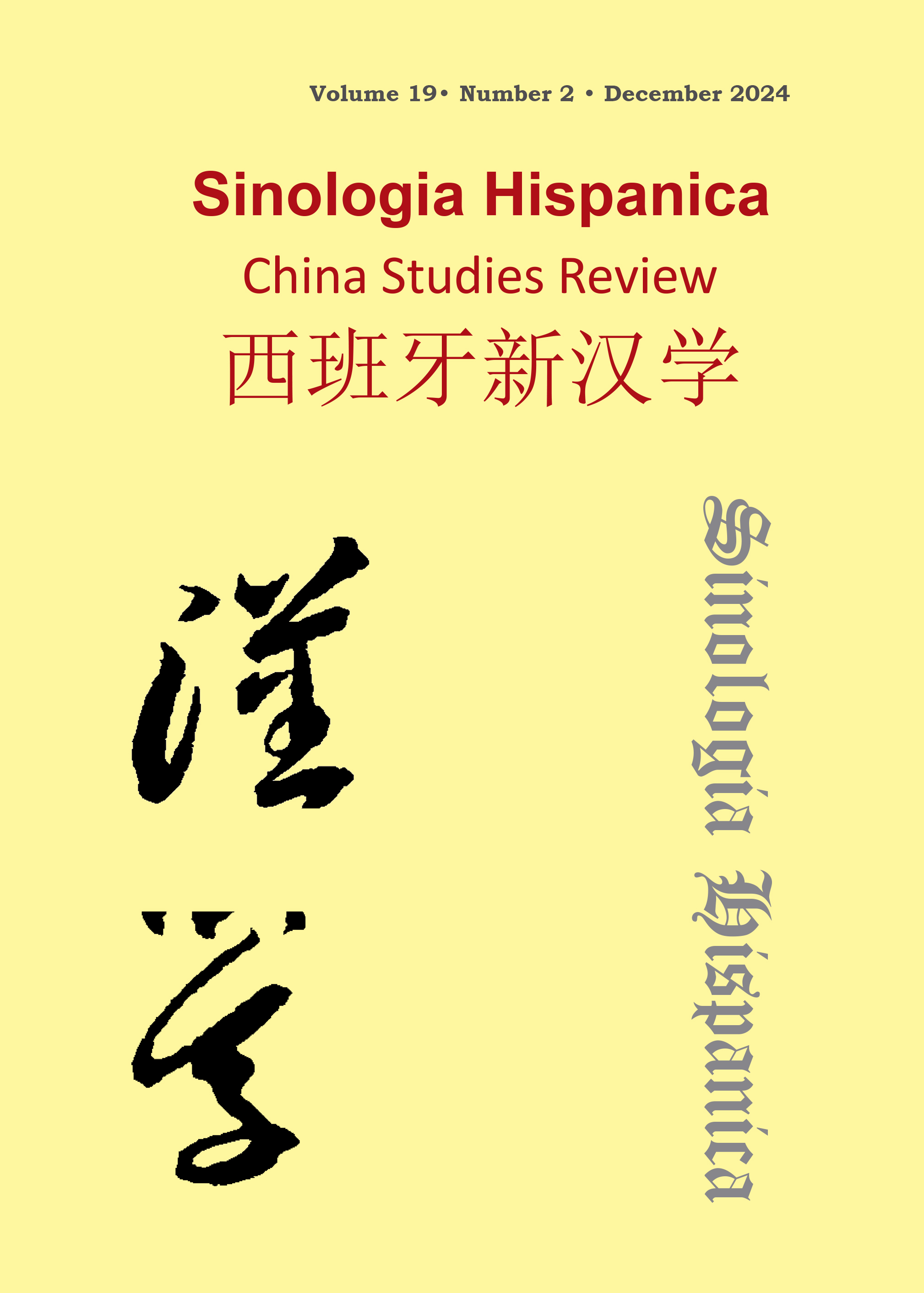
Approach to Chinese Address Forms from the Politeness Theory: The Case of The Dream of the Red Chamber
DOI:
https://doi.org/10.18002/sin.v19i2.8607Keywords:
The Dream of the Red Chamber; politeness theory; address forms; Chinese; Spanish.Abstract
Politeness is fundamental in daily life and cross-cultural exchanges. The differences in politeness between China and Spanish-speaking countries are manifested in the forms of address. The lack of understanding of these differences by translators can lead to misunderstandings. This article, based on politeness theory, summarizes the pragmatic functions of Chinese address forms and, through a comparative analysis of the terms in The Dream of the Red Chamber and its translations, explores their main characteristics and pragmatic functions, with the aim of contributing to the dissemination and translation of Redology in the Spanish-speaking world.
Métricas alternativas
Downloads
Downloads
Published
Versions
- 2026-01-22 (3)
- 2025-01-17 (2)
- 2025-01-17 (1)
Issue
Section
How to Cite
License

This work is licensed under a Creative Commons Attribution-NonCommercial-ShareAlike 4.0 International License.
Sinología Hispánica. China Studies Review considers all manuscripts on the strict condition that:
- The authors assign the exploitation rights (reproduction, distribution, public communication and transformation) of the work accepted for publication to the University of León on a non-exclusive basis. Authors can establish, on their own, additional agreements for the non-exclusive distribution of the version of the work published in the journal (for example, placing it in an institutional repository or publishing it in a book), always acknowledging the initial publication. in this magazine.
- The manuscript is your own original work and does not duplicate any other previously published work, including your own previously published work.
- The manuscript is not currently under consideration or peer review, nor accepted for publication, nor in press, nor published elsewhere.
- The manuscript contains nothing that is abusive, defamatory, libellous, obscene, fraudulent, or illegal.
- Please note that Sinologia Hispanica uses Turnitin software to screen manuscripts for unoriginal material. By submitting your manuscript to Sinologia Hispanica you are agreeing to any necessary originality checks your manuscript may have to undergo during the peer-review and production processes. Any author who fails to adhere to the above conditions will be rejected.
- Authors are allowed and encouraged to electronically disseminate the pre-printed versions (version before being evaluated) and / or post-printing (version evaluated and accepted for publication) of their works before publication, since it favors their circulation and dissemination more early and with it, a possible increase in its citation and reach among the academic community.
Sinologia Hispanica is under an international license Creative Commons Attribution-Noncommercial-Share Alike 4.0. You can read more about this license in an informative version and legal text.