

Crédits
Interdisciplinary Seminar on Women's Studies at the University of León
aiblag@unileon.es
Digital ISSN: 2444-0221
DOI: 10.18002/cg
The Cuestiones de Género journal uses the ORCID® persistent digital identifier as a system for standardizing authorship.
Our publication considers an author of a published work to be someone who has made a significant intellectual contribution to it. Following the guidelines of the Committee on Publication Ethics (COPE), to be listed as an author, the following requirements must be met:
1. Having participated in the conception and design, or in the acquisition of data, or in the analysis and interpretation of data, of the work that resulted in the article.
2. Having participated in the writing or critical revision of the text.
3. Having approved the version that will ultimately be published.
Those who do not meet these three criteria may only be acknowledged in the acknowledgments. To avoid the risk of fictitious or assumed authorship, it is recommended that all authors agree on their contributions and the order in which they will appear in the list of co-authors at the time of submission.
Authorship Contributions
This journal applies the CRediT taxonomy to research articles received from March 2025 onwards, with the intention of promoting recognition and facilitating transparency of authorship. To this end, all signatories of the article will be identified with roles that describe each person's contribution.
This information will be provided by the person submitting the article to the journal, who must ensure that the role assignment is accurate, that no symbolic authorship is included, and that the roles indicated have been agreed upon with the other authors of the article.
This information will appear in the publication itself, before the article's bibliography, and will be integrated into the article's metadata according to various international standards.
The roles proposed by CRediT are:
Conceptualization: Ideas; formulation or development of the overall research objectives and goals.
Data Curation: Management activities to annotate (produce metadata), clean data, and maintain research data (including software code, when necessary for interpretation) for initial use and subsequent reuse.
Formal Analysis: Application of statistical, mathematical, computational, or other formal techniques to analyze or synthesize the study data.
Funding: Obtaining financial support for the project that gives rise to this publication.
Research: Conducting a research process, specifically developing experiments or collecting data/evidence.
Methodology: Development or design of the methodology; creation of models.
Project Administration: Responsibility for managing and coordinating the planning and execution of the research activity.
Resources: Provision of study materials, reagents, materials, patients, laboratory samples, animals, instrumentation, computing resources, or other analytical tools.
Software: Software programming and development; design of computer programs; implementation of computer code and supporting algorithms; testing of existing code components.
Supervision: Responsibility for oversight and leadership of the planning and execution of the research activity, including mentoring outside the core team.
Validation: Verification, either as part of the activity or separately, of the overall replication/reproducibility of results/experiments and other research products.
Visualization: Preparation, creation, and/or presentation of the published work, specifically the visualization/presentation of data.
Writing:
Original Draft: Preparation, creation, and/or presentation of the published work, specifically the writing of the initial draft (including substantial translation).
Writing, reviewing, and editing: Preparation, creation, and/or presentation of published work by members of the original research group, specifically critical review, commentary, or revision, including pre- and post-publication stages.
Cuestiones de Género recommends the use of gender-neutral and inclusive language in texts submitted for publication.
In research involving the participation of the population (including children, youth, and adults), the relevance of incorporating sex or gender as an analytical variable will be considered, and whether this has influenced the results will be established. Therefore, it is expected that the results will mention differences between the sexes or those due to gender relations, or, conversely, the absence of differences.
In order to highlight the work of men and women, the full names of the people cited in the text should be cited in the reference list, avoiding initials as much as possible.
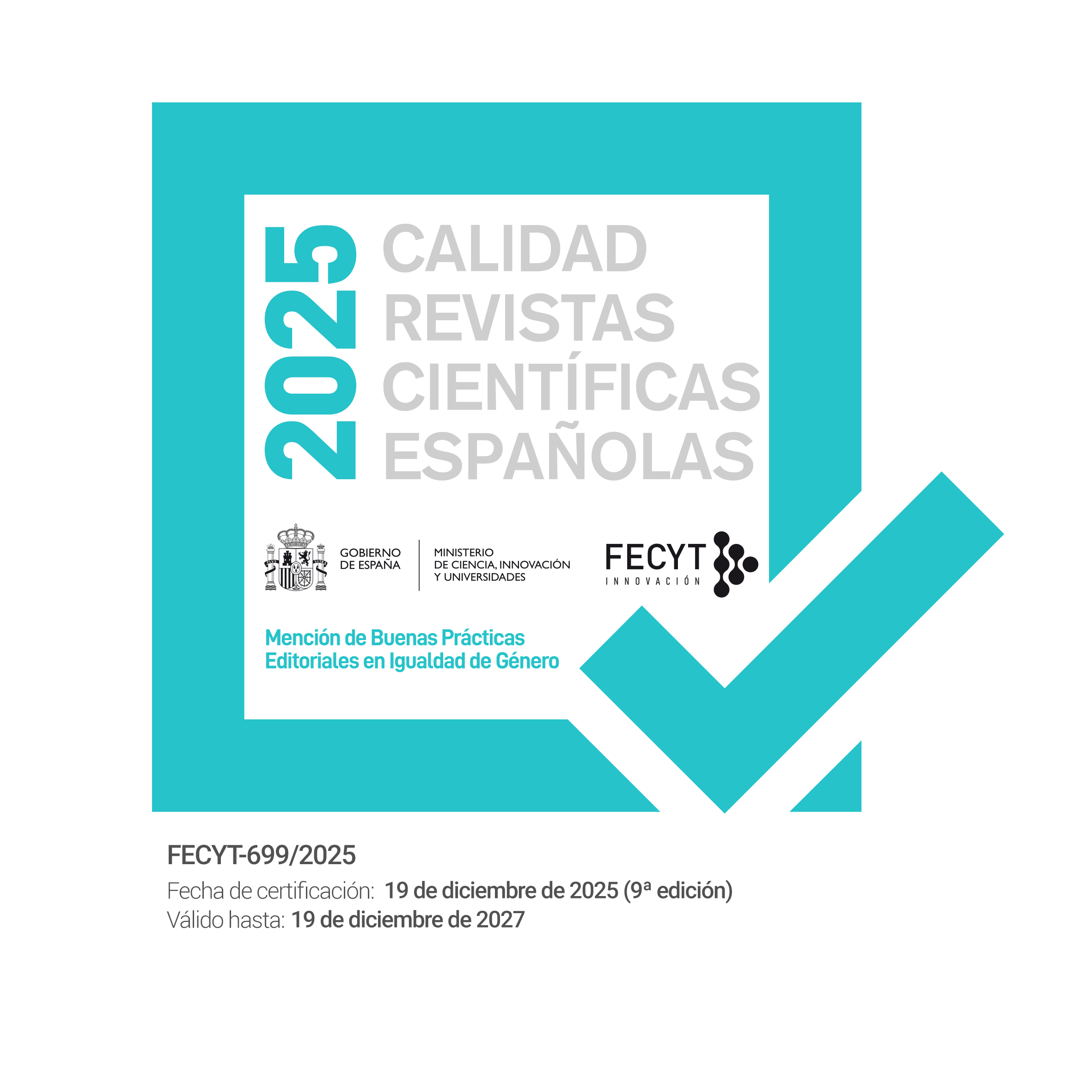
Submitted texts must use inclusive language, free of bias and prejudices associated with race, disability, gender, sexual orientation, beliefs, ideology, or socioeconomic status, using terms that avoid stereotypes, in accordance with the guidelines set forth in the Policy on Good Editorial Practices on Gender Equality.
Likewise, it is recommended that their work be based on research data that includes the variable sex and that they report on whether the conclusions have taken into account possible differences between the sexes.
The Journal Cuestiones de Género encourages authors to use a gender perspective at all stages of the research process. When appropriate, studies recommend that they consider the relevance of incorporating sex or gender as a variable in analysis and establish whether this has influenced the results obtained. Likewise, results are expected to mention differences between the sexes or those due to gender relations, or, conversely, the absence of differences.
Key Definitions:
Sex: Refers to the biological differences between women and men, including chromosomes, sex organs, and hormonal profiles.
Gender: Refers to socially constructed roles and behaviors that vary across societies and over time. Gender includes a spectrum of identities and expressions that define how people identify and express their gender.
Gender Identity: A person's self-concept as male, female, non-binary, etc., based on physical, psychological, and social factors.
Gender Presentation: How a person publicly expresses their gender identity through clothing, behavior, etc.
Research Recommendations:
Title and Abstract: Indicate whether the findings apply only to one sex or gender.
Study Design: Describe in the abstract whether sex and gender were considered in the study design.
Data Presentation: Present data disaggregated by sex and gender when this information has been collected and consent to report and share data has been obtained.
Sex and Gender Analyses: Report the results of these analyses regardless of whether they are positive or negative. Avoid post hoc analyses if the study design is insufficient.
Justification for Lack of Analysis: Justify the reasons why sex and gender-based analyses were not performed.
Promoting Equality
Researchers are encouraged to promote equality between men and women in their academic research, based on merit, competencies, and creativity. Sexist, misogynistic, or anti-LGBTQ+ content is ethically objectionable and may be rejected or retracted. It is recommended that you review the Gender Equality and Inclusion Policy.
For more information and examples, see:
Guía básica para un uso del lenguaje no sexista.
Guía para un uso no sexista de la lengua.
To implement our commitment, the following measures will be taken:
- Authors of manuscripts will declare, at the time of submission, that their manuscript is original and unpublished, that it does not contain parts of other authors' work or other fragments of their already published work, and that it has not been previously published or submitted to another journal.
- The anti-plagiarism program anti-plagiarism will be used to detect similarities and coincidences between the texts proposed for evaluation and works previously published in other sources.
- The plagiarism detection protocol will be carried out prior to peer review. If the check of a work yields a result indicating a similarity greater than 20%, the author will be informed by email, to which the full similarity report will be attached, along with the comments of an expert. All of this is intended to ensure that both parties provide relevant considerations so that Cuestiones de Género can determine whether or not the practice is plagiarized. If the work is deemed plagiarized, it will be rejected for evaluation.
This anti-plagiarism policy ensures that the Cuestiones de Género journal has originality standards that guarantee original and unpublished scientific production.
If, in an exceptional case, plagiarism is detected after the work has been published, Cuestiones de Género will issue a post-publication retraction, the manuscript will be removed from the journal's website, and the author's institution will be informed of the plagiarism.
According to the Committee on Publication Ethics (COPE) criteria, a conflict of interest refers to any personal, academic, political, economic, or commercial interests that may influence the biased evaluation process of a publication proposal.
A conflict of interest arises when the editorial team, the authorship, or the reviewers have interests that may influence any of the stages related to the publication process: from the biased writing of an article to the acceptance of a submission based on their own interests.
Cuestiones de Género encourages authors to disclose any conflicts of interest that may influence the submission, acceptance, or rejection of any scientific communication. The journal's Editorial Team will make the decision it deems most appropriate to avoid conflicts of interest at any point in the editorial process. For its part, the Cuestiones de Género Editorial Team is committed to making decisions that promote the absence of conflicts of interest at all stages of the editorial process.
In accordance with COPE standards, Cuestiones de Género will address reports of potential research misconduct.
Any report submitted will be investigated.
The editorial team will contact the person suspected of misconduct to obtain a response to the report. If this response is not considered satisfactory, the editor will seek to have the report thoroughly investigated by the members of the editorial board, as well as any research institutions it deems appropriate.
The authors who publish in this journal agree to the following terms:
1. The authors grant non-exclusive exploitation rights (reproduction, distribution, public communication, transformation) to the University of León. Therefore, they may separately establish additional agreements for the non-exclusive distribution of the version of the work published in the journal (for example, hosting it in an institutional repository or publishing it in a book), with acknowledgment of its initial publication in this journal.
2. This work is licensed under the Creative Commons Attribution-NonCommercial-ShareAlike 4.0 International License. The informative version and the legal text of the license can be consulted here.
3. Authors are permitted and encouraged to electronically disseminate pre-print (version before being reviewed) and/or post-print (version reviewed and accepted for publication) versions of their works prior to publication, as this promotes earlier circulation and dissemination, potentially increasing their citation and reach within the academic community.
Cuestiones de Género uses the Attribution-NonCommercial-ShareAlike 4.0 International License (CC BY-NC-SA 4.0). Under the following terms:
- Attribution: You must give appropriate credit, provide a link to the license, and indicate if changes were made. You may do so in any reasonable manner, but not in any way that suggests that you or your use is endorsed by the licensor.
- Non-Commercial: You may not use the material for commercial purposes.
- Share Alike: If you remix, transform, or build upon the material, you must distribute your contribution under the same license as the original. You must distribute your contribution under any use permitted by the license.
No additional restrictions — You may not apply legal terms or technological measures that legally restrict others from doing so.
Authors can consult the copyright and archiving conditions in the Dulcinea directory.
Funding Policy
All authors of Cuestiones de Género journals must declare the funding they have received to conduct their research. The Funding Statement acknowledges the contributions of funders, meets funding requirements, and promotes greater transparency in the research process.
Each author must individually declare all funding sources received for the research submitted to the journal. This information includes the names of the funding agencies, the grant numbers, and a description of each funder's role. If the funder did not play a role in the research, this must also be indicated. Authors are not required to provide a complete list of each and every grant they received if the grant is unrelated to the published research.
Funding Statement
A Funding Statement is included in the metadata of each published article. The Funding Statement includes the funding information declared by the authors. Inaccurate funding information discovered after publication may require correction.
Acknowledgments Policy
In the "acknowledgments" section of a submission to Cuestiones de Género, authors may acknowledge individuals whose contributions did not meet the criteria for authorship but significantly influenced the study.
Cuestiones de Género promotes open access to scientific literature and provides researchers with free access to all articles from the moment of their publication.
The journal will under no circumstances charge authors for publishing openly. Making research freely available to the public encourages greater global knowledge exchange, favors the visibility of authors and works, and facilitates their early citation.
Cuestiones de Género exclusively uses the Attribution-NonCommercial-ShareAlike 4.0 International license (CC BY-NC-SA 4.0).
Under the following terms:
- Attribution: You must give appropriate credit, provide a link to the license, and indicate if changes were made. You may do so in any reasonable manner, but not in such a way as to suggest that you or your use are endorsed by the licensor.
- Non-Commercial: You may not use the material for commercial purposes.
- Share Alike: If you remix, transform, or build upon the material, you must distribute your contribution under the same license as the original.
No additional restrictions—You may not apply legal terms or technological measures that legally restrict others from making any use permitted by the license.
Authors can consult the copyright and self-archiving conditions in the Dulcinea directory.
Cuestiones de Género does not charge any fees to authors for processing or publishing an article.
The Cuestiones de Género journal is committed to scientific integrity and transparency in the use of artificial intelligence (AI). This policy establishes clear guidelines on the appropriate use of AI tools for authors, reviewers, and editors.
1. General Principles
In accordance with the COPE Declaration guidelines and best practices in the scientific community:
- AI tools cannot meet authorship criteria, as they cannot assume responsibility for scientific content.
- They cannot manage conflicts of interest, copyright, or make ethical decisions on their own.
2. Use of AI by Authors
2.1. Declaration of Use:
Authors must explicitly declare the use of any AI tool in the writing or analysis of their manuscripts. The software used, the functions applied, and the sections of the manuscript where it was used must be specified.
2.2. Responsibility for Originality
The author is responsible for the originality of AI-generated or AI-assisted content. The generated material must not infringe third-party rights or plagiarize existing content.
2.3. Review of AI-Assisted Content
The author is responsible for carefully reviewing and verifying any AI-generated content to avoid bias, errors, or inaccuracies.
3. Use of AI in Peer Review
3.1. Declaration of Reviewers' Use of AI
If reviewers use AI to assist in the evaluation of a manuscript, they must declare this use. AI can serve as a support, but critical judgment and final evaluation must be performed by humans.
3.2. Manuscript Evaluation
AI should not replace the responsibility of reviewers in the evaluation of scientific articles. The process should be primarily performed by humans, and the use of AI should be complementary.
4. Use of AI by the Editorial Team
The editorial team may use AI for administrative and editing tasks, such as manuscript formatting or plagiarism detection, always under rigorous human supervision to ensure consistency and quality.
5. Ethics in the Use of AI
The use of AI must not, under any circumstances, lead to data manipulation, plagiarism, or intellectual property violations. Any misuse of AI, intentional or unintentional, will be addressed in accordance with COPE policies and other ethical standards of the publisher.
6. Policy Evaluation and Update
This policy will be reviewed regularly to adapt to technological advances in AI and to ensure best practices in scientific publishing.
7. Consequences of Non-Compliance
Non-compliance with this policy may lead to sanctions such as withdrawal of the manuscript or a ban on future submissions to Cuestiones de Género.
Crédits
Interdisciplinary Seminar on Women's Studies at the University of León
aiblag@unileon.es
Digital ISSN: 2444-0221
DOI: 10.18002/cg